понедельник, 18 мая 2020 г.


19/05/2020

8 th grade

Topic: Law and Order.
Speaking Skills

1.     Ex. 1 p.39. Match the questions (1-6) to the answers (A-G). One answer is extra.

2.     Ex. 2 p.39. For each situation (1-4), choose the appropriate response. Circle A, B, or C.

3.      Ex. 3 p. 39.  Complete the dialogue with the correct sentences (A-F). One sentence is extra.

4.     Ex. 4 p. 39. Complete the dialogue. Use: seemed, time, notice, remember, look, tell, call. Two words don`t match any gaps.


 Home Task – Send your answers to my email.


Pace work
18/05/2020
form 8
Тема: Кути і відрізки.

Line:
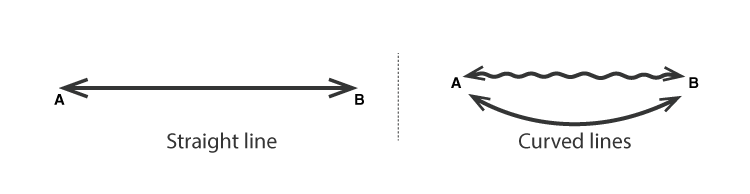
A line is a straight figure which doesn’t have an endpoint and extends infinitely in opposite directions.
straight and curved line
Ray:
A ray is a straight line, which starts from a fixed point and moves in one direction.
Ray
Line Segment
A portion of the line formed with two definite points is called a Line Segment. A line is a one-dimensional figure and has no thickness.
Line segment
Angle
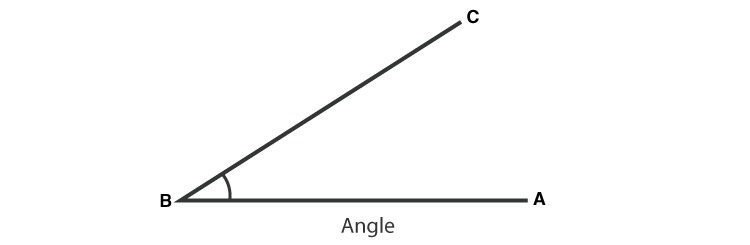
When we join two line segment at a single point, an angle is formed or we can say, an Angle is a combination of two line segments at a common endpoint. This common point is called Vertex of the angle and the two line segments are sides or arms of the angle formed.
Angle
Types of Angles
There are basically 6 types of angles which are:
  1. Acute Angle: If an angle is less than 90 degrees, then it is called an Acute angle
  2. Obtuse Angle: If an angle is more than 90 degrees, then it is called Obtuse Angle
  3. Right Angle: If an angle is exactly at 90 degrees, then it is called Right Angle.
  4. Straight Angle: If an angle is exactly 180 degrees, then it is called Straight Angle.
  5. Reflex Angle: If the angle is more than 180 degree but less than 270 degrees, it is denoted as a Reflex angle.
  6. Full Angle: A 360-degree angle is called a Full angle.

Pairs of Lines

Intersecting lines: Two lines intersect if they have a point in common. This common point O is their point of intersection.
Transversal: A line that intersects two or more lines at distinct points is called a transversal.
Angles made by the transversal: There are different angles formed when the transversal cuts the lines. They are:
  • Interior angles
  • Exterior angles
  • Pairs of Alternate interior angles
  • Pairs of Alternate exterior angles
  • Pairs of Corresponding angles
  • Pairs of interior angles on the same side of the transversal
Transversal of Parallel Lines: We know that the parallel lines are the lines that do not meet anywhere. Transversals of parallel lines give rise to quite interesting results.

воскресенье, 17 мая 2020 г.


18/05/2020

8 th grade

Topic: Law and Order.
Listening Skills

1.     Ex. 1 p.38. You are going to listen to five recordings. For each question (1-5), choose the answer which matches what you have heard by circling the appropriate letter (A, B, C).

2.     Ex. 2 p.38. You are going to hear an announcement. Decide which sentences (1-3) are T (true) and which are F (false).

3.      Ex. 3 p. 38.  You are going to hear four questions (1-4) twice. Choose the correct response (A-E) according to what you hear and write it in the right box. There is one extra response.

4.     Ex. 4 p. 38. Complete the dictation.  

 Home Task – Send your answers to my email.


пятница, 15 мая 2020 г.

Lesson 3
 Use of English Test
15/05/2020

       Today, you are writing  a test
       The link will be open for 30 minutes (10.00-10.30)
      Follow the link and do the task
     Send your completed test to my email before 10.40

Good luck!!!!!

среда, 13 мая 2020 г.

Lesson 33  14.05 Topic : Grammar Revision. Adjectives. Adverbs


Workbook
Read and review the rules on page 98

1. Ex. 13 p.99. Fill in the gaps with the adjectives in the correct order.
2.  Ex. 14 p.99. Underline the correct adjective.

3.  Ex. 15 p.99. Write the adverb of the following adjectives.

4.  Ex. 16 p.99. Choose an appropriate adjective, turn it into an adverb and
put it in the correct sentence.

 Home Task – Send the photo of Ex. 17,18, 19 p. 99 to my email


Pace Work
8 form
13/05/2020
Тема: Риби.


About Fish
All fish share two traits: they live in water and they have a backbone—they are vertebrates.
Apart from these similarities, however, many of the species in this group differ markedly from one another. Fin fish like salmon have gills, are covered in scales, and reproduce by laying eggs. Eels, by contrast, have worm-like bodies and exceedingly slimy skin. Lungfish gulp air. Whale sharks, the largest fish, give birth to live young and eat only tiny fish, squid, and plankton. Some species, such as the weedy sea dragon, are so bizarre they seem almost unreal.
Fish have developed special senses, too. Because water transmits sounds, disperses chemicals, and conducts electricity better than air, fish rely less on their vision and more on their hearing, taste, and smell. Many can detect motion in the water using a special row of scales with sensors known as the lateral line. Others can find their prey and even navigate by detecting electrical charges.
One reason fish are so diverse is that 70 percent of the planet is covered in water. The animals in this group live in a variety of habitats ranging from coral reefs and kelp forests to rivers, streams, and the open ocean. Another is that fish are very old on the evolutionary scale. According to fossil records, they have been on Earth for more than 500 million years! The total number of living fish species—about 32,000— is greater than the total of all other vertebrate species (amphibians, reptiles, birds, and mammals) combined.
Watch the video:

Pace Work
8 form
12/05/2020
Тема: Структура речення.


Definitions and Examples of Basic Sentence Elements

The Mastering the Mechanics webinar series also describes required sentence elements and varying sentence types. Please see these archived webinars for more information.

Key: Yellow, bold = subject; green underline = verb, blue, italics = object, pink, regular font = prepositional phrase

Independent clause: An independent clause can stand alone as a sentence. It contains a subject and a verb and is a complete idea.
  • I like spaghetti.
  • He reads many books.
Dependent clause: A dependent clause is not a complete sentence. It must be attached to an independent clause to become complete. This is also known as a subordinate clause.
  • Although I like spaghetti,…
  • Because he reads many books,…
Subject: A person, animal, place, thing, or concept that does an action. Determine the subject in a sentence by asking the question “Who or what?”
  • I like spaghetti.
  • He reads many books.
Verb: Expresses what the person, animal, place, thing, or concept does. Determine the verb in a sentence by asking the question “What was the action or what happened?”
  • I like spaghetti.
  • He reads many books.
  • The movie is good. (The be verb is also sometimes referred to as a copula or a linking verb. It links the subject, in this case "the movie," to the complement or the predicate of the sentence, in this case, "good.")
Object: A person, animal, place, thing, or concept that receives the action. Determine the object in a sentence by asking the question “The subject did what?” or “To whom?/For whom?”
  • I like spaghetti.
  • He reads many books.
Prepositional Phrase: A phrase that begins with a preposition (i.e., in, at for, behind, until, after, of, during) and modifies a word in the sentence. A prepositional phrase answers one of many questions. Here are a few examples: “Where? When? In what way?”
  • I like spaghetti for dinner.
  • He reads many books in the library.

English Sentence Structure

The following statements are true about sentences in English:
  • A new sentence begins with a capital letter.
    • He obtained his degree.
  • A sentence ends with punctuation (a period, a question mark, or an exclamation point).
    • He obtained his degree.
  • A sentence contains a subject that is only given once.
    • Smith he obtained his degree.
  • A sentence contains a verb or a verb phrase.
    • He obtained his degree.
  • A sentence follows Subject + Verb + Object word order.
    • He (subject) obtained (verb) his degree (object).
  • A sentence must have a complete idea that stands alone. This is also called an independent clause.
    • He obtained his degree.

Simple Sentences

A simple sentence contains a subject and a verb, and it may also have an object and modifiers. However, it contains only one independent clause.
Key: Yellow, bold = subject; green underline = verb, blue, italics = object, pink, regular font =prepositional phrase
Here are a few examples:
  • She wrote.
  • She completed her literature review.
  • He organized his sources by theme.
  • They studied APA rules for many hours.

Compound Sentences

A compound sentence contains at least two independent clauses.  These two independent clauses can be combined with a comma and a coordinating conjunction or with a semicolon.
Key: independent clause = yellow, bold; comma  or semicolon = pink, regular font; coordinating conjunction = green, underlined
Here are a few examples:
  • She completed her literature review, and she created her reference list.
  • He organized his sources by theme; then, he updated his reference list.
  • They studied APA rules for many hours, but they realized there was still much to learn.
Using some compound sentences in writing allows for more sentence variety.

Complex Sentences

A complex sentence contains at least one independent clause and at least one dependent clause. Dependent clauses can refer to the subject (who, which) the sequence/time (since, while), or the causal elements (because, if) of the independent clause.
If a sentence begins with a dependent clause, note the comma after this clause. If, on the other hand, the sentence begins with an independent clause, there is not a comma separating the two clauses.
Key: independent clause = yellow, bold; comma = pink, regular font; dependent clause = blue, italics
Here are a few examples:
  • Although she completed her literature review, she still needed to work on her methods section.
    • Note the comma in this sentence because it begins with a dependent clause.
  • Because he organized his sources by theme, it was easier for his readers to follow.
    • Note the comma in this sentence because it begins with a dependent clause.
  • They studied APA rules for many hours as they were so interesting.
    • Note that there is no comma in this sentence because it begins with an independent clause.

Compound-Complex Sentences

Sentence types can also be combined. A compound-complex sentence contains at least two independent clauses and at least one dependent clause.
Key: independent clause = yellow, bold; comma  or semicolon = pink, regular font; coordinating conjunction = green, underlined; dependent clause = blue, italics
  • She completed her literature review, but she still needs to work on her methods section even though she finished her methods course last semester.
  • Although he organized his sources by theme, he decided to arrange them chronologically, and he carefully followed the MEAL plan for organization. 
  • With pizza and soda at hand, they studied APA rules for many hours, and they decided that writing in APA made sense because it was clear, concise, and objective.
  • Using some complex-compound sentences in writing allows for more sentence variety.
  • Pay close attention to comma usage in complex-compound sentences so that the reader is easily able to follow the intended meaning.